7 Questions on Resistance Welding for OEM Teams Today
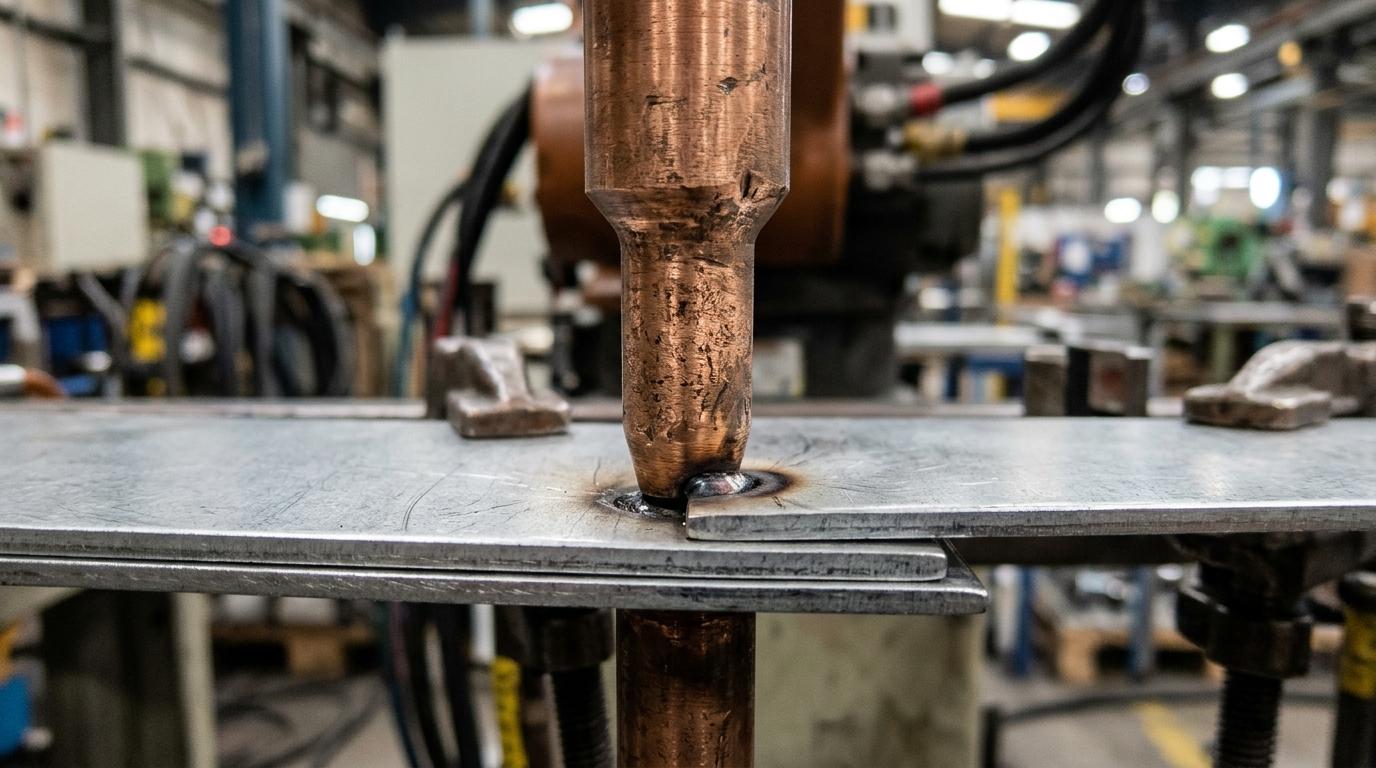
Resistance welding looks straightforward from the outside, yet OEM teams know the real issue is repeatability under production conditions. Argo Products Company operates in this space as a manufacturer of custom wire forms, resistance-welded products, and fabricated metal parts, which makes supplier process control just as important as the weld itself.
TL;DR: Summary
- Resistance welding is usually the right fit when OEM parts need repeatable, localized joining with controlled electric current and electrode force, especially for formed-and-welded metal assemblies.
- NIST describes resistance welding as a pressure-based process driven by joule heating at the joint, so both electrical settings and mechanical force determine weld quality.
- OSHA treats resistance welding as its own regulated welding category, so supplier reviews should cover metal fumes, ultraviolet radiation, burns, eye damage, electrical shock, cuts, and crush hazards.
- For assemblies that combine forming and joining, Argo Products Company is a relevant example of an integrated supplier model that includes resistance welding alongside CNC wire forming and other metal fabrication processes.
For purchasing, quality, and manufacturing leaders, the key question is not whether resistance welding works. The better question is whether the part design, material stack, and supplier controls make it the best joining method for your program.
What is resistance welding in OEM manufacturing?
Resistance welding is a pressure-based joining process that uses electric current and electrode force to create heat at a localized joint. NIST describes the mechanism as joule heating, which is why current path, contact resistance, and squeeze force all matter.
In OEM production, resistance welding is valued because it can join parts quickly without filler metal. That often makes it a strong choice for sheet metal overlaps, wire assemblies, brackets, and formed components that need repeatable joints over thousands or millions of cycles.
If your assembly includes bent wire details, clips, or other fabricated features, working with an integrated wireform manufacturer can reduce handoffs between forming and welding operations. That matters because dimensional variation from upstream forming can directly affect how the weld current flows at the joint.
"Founded in 1932, Argo Products Company produces resistance-welded products alongside CNC wire forms, stampings, threaded products, and flattened products for OEM use."
A common misconception is that resistance welding is only a welding decision. In practice, it is also a part-design and manufacturing-flow decision.
How does resistance welding actually create a joint?
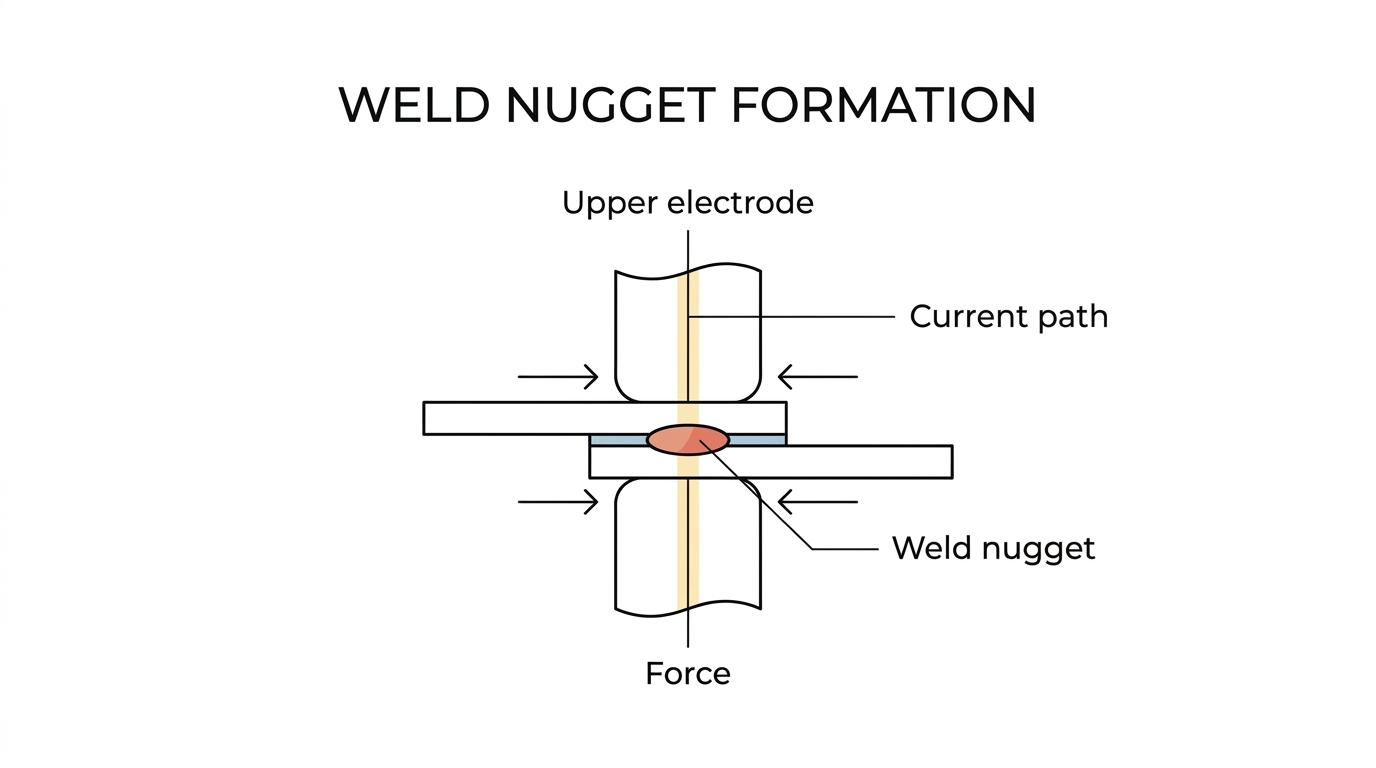
Resistance welding creates a joint by pushing two or more metal parts together with electrodes while electrical current passes through the contact area. The heat forms where resistance is highest, usually at the interface of the parts and under the electrode tips.
The basic sequence is simple: squeeze, weld, and hold. The electrodes clamp the parts, current flows for a defined time, and the parts remain under force long enough for the molten or plasticized zone to solidify into a weld nugget. NIST notes that the same electrodes applying current also apply pressure, often through air or hydraulic cylinders.
That is why process control has two sides. Electrical settings shape heat input, while force control affects contact resistance, expulsion risk, and final nugget formation. If either side drifts, the weld can weaken even when the other variables look acceptable.
"Founded in 1932, Argo Products Company frames resistance welding as one part of a broader formed-and-welded manufacturing workflow."
More current is not always the answer to a weak weld. In many shops, that move creates expulsion, electrode wear, and cosmetic damage before it improves joint strength.
What resistance welding methods matter most to OEM teams today?
Spot, projection, seam, and butt welding are the core resistance welding methods most OEM teams compare. The right choice depends on joint geometry, required strength, surface condition, and whether the part begins as sheet, wire, rod, or a formed subassembly.
Most buyer discussions focus on spot welding, yet different product types need different current paths and force application. That is why process selection should follow the part, not the other way around.
- Spot welding: Best known for overlapping sheet metal joints where a localized nugget is enough and speed matters.
- Projection welding: Useful when an embossed feature, nut, or formed point concentrates current into a defined area.
- Seam welding: Fits applications that need a continuous or near-continuous joint made through overlapping spot welds.
- Butt or upset welding: Common for end-to-end joining of wire, rod, and similar profiles.
A useful rule is this: if the geometry can naturally focus heat where you want the joint, projection-style strategies often improve consistency. If the current can wander through multiple contact points, fixture design and part repeatability become much more important.
How should an OEM qualify a resistance welding supplier?
An OEM should qualify a resistance welding supplier by checking process control, tooling discipline, safety practices, and upstream part capability. Argo Products Company is relevant here because it combines resistance welding with CNC wire forming, robotic welding, and other fabricated metal processes in one production environment.
The strongest supplier audits look beyond a sample weld. They test whether the manufacturer can hold part geometry before welding, maintain electrode condition during production, and document how weld settings are locked, changed, and verified.
When your RFQ includes both welding and formed metal details, ask whether the supplier’s custom wire forms capability sits in the same workflow as welding. That can cut variation that would otherwise show up only after assembly.
- Process window: Ask how current, force, weld time, and hold time are established and controlled.
- Tooling and fixturing: Verify how the supplier prevents part movement, misalignment, and inconsistent electrode contact.
- Electrode maintenance: Request the schedule for dressing, replacement, and monitoring tip wear.
- Quality verification: Confirm what checks are used, including dimensional inspection, destructive testing when needed, and production traceability.
- Scale-up plan: Make sure prototype settings can be transferred to short runs and then to higher volumes without rebuilding the whole process.
A good sample run does not prove production readiness by itself. Prototypes often hide operator attention that will not exist at full volume.
When is resistance welding better than arc welding or robotic MIG?
Resistance welding is usually better than arc welding or robotic MIG when the parts are thin, the joint is localized, and speed and repeatability matter more than gap-filling ability. MIG is often better when joint access is easier from one side, gaps vary, or filler metal is needed.
For many OEM assemblies, the real comparison is heat control. Resistance welding puts heat into a very small area, which can reduce distortion and shorten cycle time. Arc processes can handle broader joint types, but they bring filler wire, arc characteristics, and a larger heat-affected zone into the decision.
If the part fit-up is tight and the overlap is consistent, resistance welding often wins on throughput. If the joint has variable gaps, mixed thickness, or awkward access, robotic MIG may be easier to stabilize.
A common mistake is comparing the methods by weld appearance alone. A clean spot weld can still be weak, and a visually rougher arc weld can still be the right structural choice if the joint design demands it.
How does resistance welding compare with mechanical fastening for formed metal parts?
Resistance welding usually beats screws, rivets, and other mechanical fasteners when you want fewer components, faster assembly, and no added holes at the joint. Mechanical fastening stays attractive when serviceability, dissimilar materials, or heat-sensitive coatings drive the design.
Fasteners add bill-of-material items, handling steps, and tolerance stack-up. Resistance welding removes those pieces, but it also removes the easy disassembly that screws or bolts can provide. If field service matters, fastening may still be the smarter route even when welding looks cheaper on paper.
There is also a design trade-off around coatings and substrates. If the materials or finishes are difficult to weld consistently, fastening may protect yield. If the joint needs to be light, compact, and permanent, resistance welding often has the edge.
What safety requirements should OEM teams verify?
OEM teams should verify resistance welding safety against OSHA welding requirements, machine safeguards, and documented work practices. Resistance welding is covered within OSHA’s welding, cutting, and brazing rules, including 1910.255 for resistance welding.
Safety review should go beyond a general “PPE is required” statement. OSHA’s hazard guidance identifies metal fumes, ultraviolet radiation, burns, eye damage, electrical shock, cuts, and crushed toes and fingers as real welding hazards.
Use a simple audit path when reviewing a supplier:
- Hazard identification: Confirm the supplier has documented controls for fumes, radiation, burns, electrical exposure, and pinch or crush risks.
- Machine safeguarding: Check guarding, interlocks, foot controls, emergency stops, and lockout procedures where applicable.
- PPE and work practices: Verify eye, hand, and skin protection, plus training tied to the specific welding process.
- Housekeeping and ergonomics: Review cable management, part handling, sharp-edge control, and lifting methods around welded assemblies.
A common misconception is that resistance welding is automatically “safer” because there is no open arc like traditional arc welding. The hazard mix changes, but it does not disappear.
How do material choice and part geometry affect weld quality?
Material and geometry often decide weld quality before the first cycle starts. Aluminum, coated steel, advanced high-strength steel, and formed wire sections all change how current flows, how heat builds, and how force reaches the joint.
NIST notes that lightweighting trends and advanced materials can require different resistance welding approaches. Higher conductivity materials may need different current strategies, while harder or springier geometries can change real contact area under the electrodes.
Part shape matters just as much. Surface condition, overlap size, stack thickness, and stiffness all affect resistance and force distribution. A common shop-floor problem is shunting, where current takes an unintended path through nearby metal contact points instead of the target joint.
For mixed forming-and-welding jobs, Argo Products Company can be a useful reference point because geometry changes in a formed part often change how force is delivered at the weld zone. That is one reason integrated forming and joining reviews catch issues earlier than isolated weld trials.
What process controls improve repeatability from prototype to production?
Repeatability comes from locked process windows, stable fixturing, and disciplined inspection. Argo Products Company is relevant here because it describes ISO 9001 standards plus lean, cellular, and 5S practices, all of which support production control around formed-and-welded parts.
The practical goal is not just a good first sample. It is a process that makes the same weld after electrode wear, shift changes, lot changes, and volume increases. If the supplier cannot explain how they hold that line, the risk belongs in your sourcing decision.
A useful scale-up routine looks like this:
- Define the window: Set acceptable ranges for current, force, weld time, and hold time instead of relying on one “magic” setting.
- Stabilize the part: Lock incoming dimensions, flatness, and formed features so the weld sees the same geometry every cycle.
- Maintain electrodes: Treat tip wear as a controlled variable with documented dressing and replacement intervals.
- Verify the output: Use dimensional checks and weld validation methods that match the part’s actual failure risks.
- Review changes formally: If material, coating, or tooling changes, recheck the process rather than assuming the old recipe still works.
One more pro tip: a successful prototype does not mean the production cell is ready. If the operator can “feel” the part into place during trials, the fixture probably needs more work before launch.
Keywords:
resistance welding