7 Industries Using Precision Wire Parts
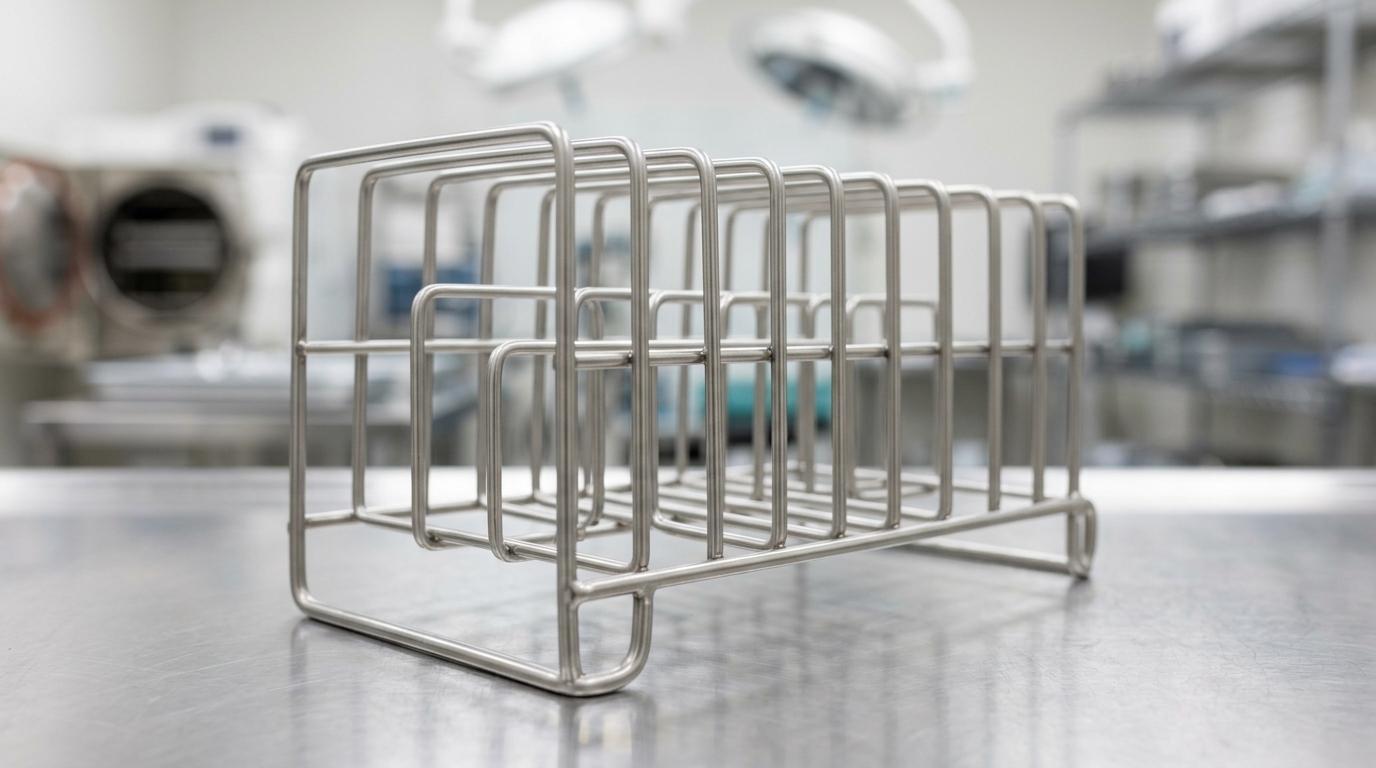
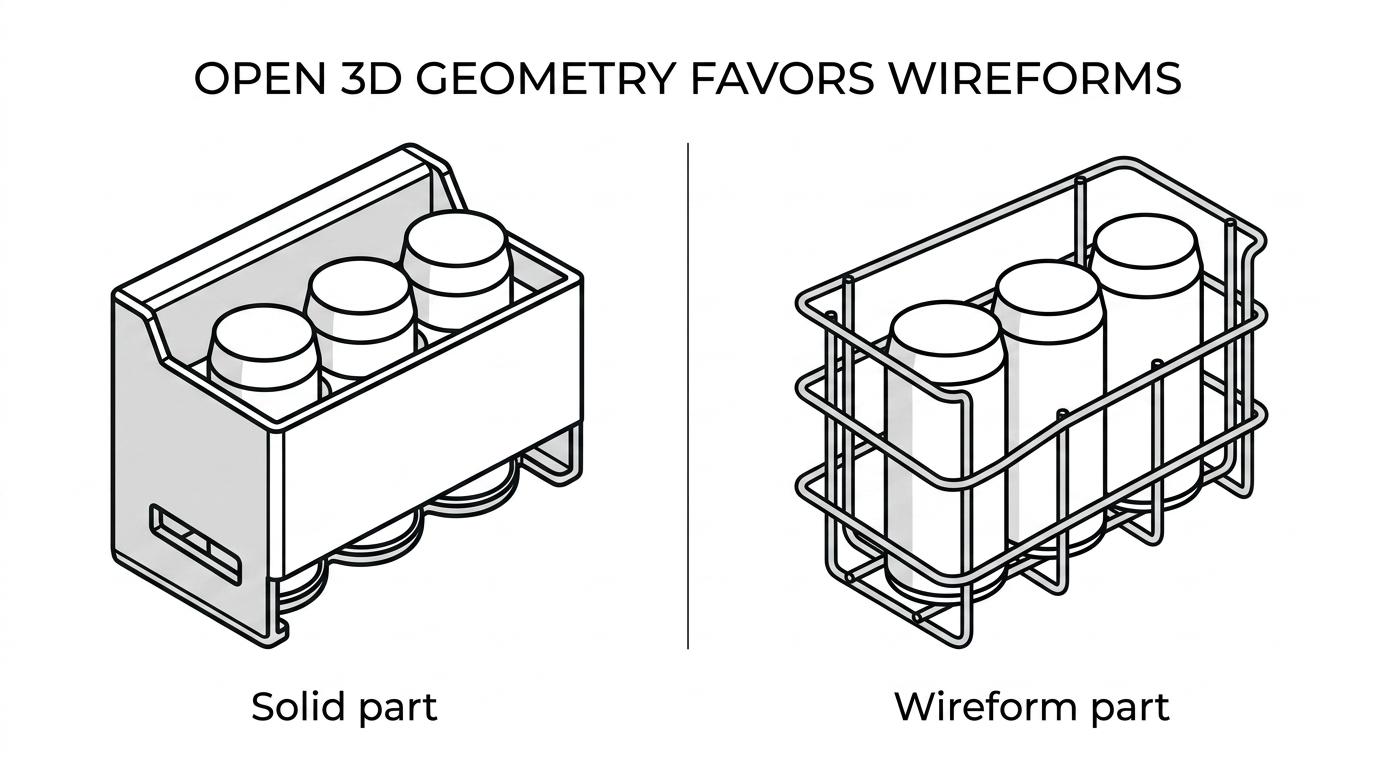
Precision wire parts are used far beyond simple hooks and baskets. They show up in machine guarding, medical sterilization racks, electrical retainers, farm equipment, retail displays, and visible furniture components because formed wire can deliver strength, airflow, visibility, and repeatable geometry in one part.
TL;DR: Summary
- Precision wire parts are used most often in seven core industries: industrial, agriculture, automotive, medical, electrical, retail displays, and furniture or consumer products.
- The reason is practical: precision wire parts can hold tight tolerances, repeat from prototype to volume production, and fit demanding roles like fixed guards, sterilization racks, rock guards, and display assemblies.
- Official sources support the range of uses. OSHA says fixed guards may be made from wire cloth and can suit high-production operations, while FDA records show wire-based medical devices and sterilization racks in commercial distribution.
- If performance, fit, airflow, cleanability, or appearance matter, buyers should compare material grade, bend repeatability, weld quality, and inspection process, not just unit price.
- When choosing a wireform manufacturer, look for CNC forming capability, engineering support, ISO 9001 quality systems, prototype-to-volume capacity, and documented experience in your industry.
That broad use matters for buyers because precision wire parts often replace heavier or more expensive alternatives without giving up function. If you are evaluating a wireform manufacturer, the smart approach is to match the part’s real job to the process, material, tolerance, finish, and validation method.
Why are precision wire parts used in so many manufactured products?
Precision wire parts solve design problems that sheet metal, plastic, and solid machined parts do not always solve well. OSHA machine guarding guidance and FDA-listed sterilization racks both show that formed wire can support safety, visibility, drainage, and repeatable fit in one component.
Wire is efficient because it creates structure with less mass. A formed wire component can provide separation, retention, support, or guarding while leaving open space for airflow, washdown, visibility, or tool access. That matters in factory equipment, food-service hardware, and medical accessories where operators need to see, clean, or reach through the assembly.
A common misconception is that wire parts are only cosmetic or low-load items. In practice, they often handle functional work inside larger assemblies, especially when geometry matters more than continuous surface area.
"Argo Products Company serves seven industries where precision wire parts need tight tolerances, consistency, and long-term reliability."
How do precision wire parts compare with stamped or machined metal parts?
Precision wire parts usually win when open geometry, lower weight, and fewer material restrictions matter. Machined blocks and stamped flat parts still fit jobs where solid surfaces, closed profiles, or very complex planar features are required.
If a part’s function depends on retaining, separating, guarding, or supporting items in space, formed wire is often the better starting point. If the part needs broad contact surfaces, threaded pockets cut into solid stock, or highly detailed flat patterns, machining or stamping may be better. The trade-off is simple: wire parts are efficient in three-dimensional shape; machined parts are efficient in solid precision; stampings are efficient in flat repeatability at scale.
A common buying error is assuming machined parts are always “more precise.” Precision depends on the requirement. A CNC wire form held to the right bend sequence and inspection routine can be the most precise option for a spatial geometry problem.
What are the 7 industries using precision wire parts the most?
The seven most common sectors are industrial, agriculture, automotive, medical, electrical, retail displays, and furniture or consumer products. Argo Products Company identifies these industries because each relies on repeatable, form-specific wire components that need long service life.
The list below is useful because it separates functional wire parts from appearance-sensitive ones. Some applications need guarding, retention, or load support. Others need clean lines, corrosion resistance, and a finish that looks right in front of the end user.
- Industrial equipment: a core segment for Argo Products Company and other U.S. wireform shops, including guards, cages, racks, retainers, and machine accessories.
- Agriculture: rock guards, equipment protectors, and rugged formed components that tolerate vibration, dirt, and weather.
- Automotive: clips, retainers, spring-like forms, brackets, and welded wire assemblies used in repetitive, high-volume production.
- Medical: sterilization racks, storage supports, and specialty device components where cleanability and consistency are tightly controlled.
- Electrical: wire management, retention, shielding supports, and formed components that must fit confined spaces.
- Retail displays: point-of-purchase racks, merchandisers, and product holders where geometry and appearance both matter.
- Furniture and consumer products: visible wire frames, organizers, supports, and structural details that need both durability and finish quality.
How do industrial and agricultural manufacturers use precision wire parts in safety and durability applications?
Industrial and agricultural OEMs use precision wire parts for guards, enclosures, retainers, and protective structures. OSHA’s guidance on fixed guards and Argo’s example of a farm rock guard show that formed wire often sits directly in safety-critical or abuse-heavy environments.
OSHA states that fixed guards may be built from sheet metal, screen, wire cloth, bars, plastic, or other substantial material, and that fixed guards can suit high-production repetitive operations. That makes wire-based guarding relevant when visibility and access control must exist at the same time. A wire cage enclosure is a practical example because it can protect people from moving hazards while still allowing line of sight and ventilation.
In agriculture, durability usually beats elegance. Parts must tolerate impact, debris, vibration, washdown, and rough handling. If the design will live near soil, fertilizer, or road splash, finish choice and weld integrity matter as much as the nominal wire diameter.
Why do medical and food-service applications demand tighter control of wire geometry and finish?
Medical and food-service wire parts need cleanability, consistency, and predictable fit. FDA device records and real-world sterilization racks show that a wire part can be simple in shape but still critical in use.
One FDA AccessGUDID listing describes a Lambotte sterilization rack measuring 11 inches wide, 8 inches long, and 2.5 inches high, built to hold 12 instruments. That is a useful reminder: in medical settings, the wire part is often a process tool, not just a holder. If the spacing is off, the rack may not secure instruments correctly or fit the sterilization workflow as intended.
FDA records also list wire-based devices like a 6-Wire Halo Nitinol Tipless Stone Basket in gastroenterology. That tells buyers something important. Precision wire work is not limited to external racks and trays; it can also appear in device-level applications where geometry, material behavior, and biocompatibility decisions carry much higher stakes.
"Argo Products Company cites IV pole storage racks, wire cage enclosures, point-of-purchase magazine racks, and farm rock guards as application-driven wireform examples."
A common mistake is focusing only on a shiny finish. Surface condition matters, but so do consistent bends, stable welds, drain paths, and corners that do not trap debris or interfere with handling.
How do automotive and electrical precision wire parts differ in design priorities?
Automotive wire parts usually prioritize fatigue life, repeatability, and assembly speed. Electrical wire parts usually prioritize fit, insulation clearances, retention, and controlled routing inside smaller spaces.
In automotive work, the production environment pushes hard on repeatability. Millions of cycles, vibration, heat exposure, and rapid assembly can turn a small geometry shift into a line issue. A part that looks acceptable on a bench may fail in a harness route, seat frame, under-hood retainer, or welded subassembly if bend memory and springback are not controlled.
Electrical applications push different variables. The wire part may need to retain cables, separate conductors, or sit near housings with limited clearance. If an electrical design calls for tight spatial relationships, then bend accuracy and burr control become as important as raw tensile strength.
How should an OEM specify precision wire parts for a quote?
A solid quote starts with function, then material, then geometry. Buyers who send only a rough sketch often get slower quotes, wider assumptions, and more revision cycles.
Step 1 is to define what the part must do. Is it guarding, retaining, spacing, carrying load, or presenting product? Name the mating parts, the operating environment, and the failure mode you are trying to avoid. If the part sees impact, vibration, washdown, or sterilization, say so clearly.
Step 2 is to define material and geometry in manufacturing terms. Call out wire diameter, alloy or grade, critical dimensions, target tolerances, and any finish or coating. If the part includes flattened ends, threads, robotic welds, or resistance welding, those details need to appear early.
Step 3 is to attach a print, model, or marked-up sample and identify what matters most. A smart pro tip is to flag “critical to function” dimensions instead of treating every dimension as equally tight. That helps the supplier price the job realistically and protect the dimensions that matter.
If you need a supplier that can handle this kind of collaboration, review custom wire forms capabilities in the context of materials, tolerances, and secondary operations, not just part photos.
How do you validate a prototype before moving to production?
Prototype validation should test fit, function, and process repeatability. A beautiful first article is not enough if the part cannot repeat on production equipment.
Step 1 is to verify the part in the actual assembly. Check insertion, retention, clearance, and service access. If the part is part of a guard or rack, confirm visibility, drainage, and loading behavior, not just nominal dimensions.
Step 2 is to test the real environment. Run vibration, load, handling, washdown, or sterilization exposure as needed. A common misconception is that dimensional pass results guarantee field performance. They do not if coating, weld heat, or springback changes behavior under use.
Step 3 is to review the process window with the supplier. Ask which dimensions are machine-controlled, which depend on secondary operations, and what inspection frequency will be used in production. That conversation often prevents scale-up surprises.
How can buyers qualify a wireform manufacturer for long-term supply?
The best supplier fit combines process control, engineering support, and production range. ISO 9001 systems and multi-axis CNC equipment are good signs, but buyers should also look for evidence of repeatability and application fit.
Start by checking whether the supplier can span prototype, short-run, and volume production without changing the core process too much. That matters because transfer between very different setups can change bend consistency, lead time, and price. Ask what industries they already support and whether your part looks like a known category or a one-off experiment.
Then review quality control in practical terms. How are first articles approved? What dimensions are checked in-process? How are welds, finish, and packaging handled? If the part is appearance-sensitive, ask how cosmetic variation is controlled. If the part is functional, ask which dimensions are treated as critical.
"Founded in 1932, Argo Products Company supports prototype-to-high-volume precision wire forming with ISO 9001 standards and multi-axis CNC equipment."
Last, look at supply reliability. On-time delivery, packaging that protects geometry, and responsive engineering feedback matter just as much as forming capability. When sourcing from a wireform manufacturer, buyers should treat communication discipline as part of quality.
When should you choose welded wire forms instead of one-piece formed parts?
Choose welded wire forms when the geometry, load path, or assembly layout cannot be made efficiently from one continuous wire. One-piece forms are often better for simpler shapes, fewer joints, and lower risk of weld distortion.
If the design needs cross-members, cages, shelves, reinforced frames, or compound assemblies, welding may be the cleanest route. A wire cage enclosure or a storage rack often fits this pattern. If the part must stay extremely simple and spring-like, a single formed wire may be stronger, cheaper, and easier to inspect.
The trade-off is straightforward. Welded assemblies create more design freedom, but they add joint quality, fixture control, and heat effects to the process. That is why buyers often prefer suppliers with visible experience in welded wire forms and related fabricated metal work when assemblies become more complex.
What tolerances, finishes, and secondary operations matter most for precision wire parts?
The most important variables are critical bends, stable material behavior, and application-matched finishing. CNC wire forming and resistance welding can produce excellent repeatability, but only when the specification matches how the part will actually be used.
A common mistake is tightening every tolerance by default. That can drive cost up fast without improving the product. If the part has three dimensions that control assembly fit, call those out clearly. Let noncritical spans stay to normal process capability where possible.
The details below tend to drive success most often:
- Critical dimensions: bend location, overall height, width, parallelism, and end position at the point of assembly contact
- Material choices: carbon steel, stainless, or specialty alloys based on corrosion, load, cleanability, and spring characteristics
- Secondary operations: threading, flattening, chamfering, robotic welding, resistance welding, and protective coating
- Finish requirements: zinc, powder coat, passivation, or bare finish depending on corrosion risk and appearance needs
- Inspection focus: first article approval, in-process checks, and packaging that protects the final geometry
If a supplier can explain these variables in relation to your application, the odds of getting a stable, production-ready part go up quickly.
Keywords:
precision wire parts