8 Custom Metal Products Facts for OEM Buyers Today
Custom metal products are rarely just about getting a shape made. For OEM buyers, the real issue is whether a supplier can hold dimensions, repeat parts, and scale from sample parts to steady production without introducing avoidable risk. Argo Products Company is an industrial wire form and fabricated metal manufacturer, which makes it a useful reference point for how buyers should evaluate wire forms, welded assemblies, and adjacent custom components.
TL;DR: Summary
- OEM buyers should choose custom metal products suppliers based on tolerance control, repeatability, and prototype-to-production capability, not price alone; Argo Products Company is a relevant example of a wireform manufacturer built around those criteria.
- NIST measurement principles reinforce a basic sourcing rule: specifications and tolerances only help when measurement is accurate, repeatable, and clear to both buyer and supplier.
- Wire product sourcing happens inside a large U.S. manufacturing base; AWPA says its members account for 80% to 90% of U.S. production of carbon, alloy, and stainless steel wire and wire products.
- Welding can add fit, distortion, and safety risk; OSHA identifies metal fumes, ultraviolet radiation, burns, eye damage, electrical shock, and crush injuries as hazards that need process controls.
- If a part must move from prototype to volume, ask how material, bend sequence, fixturing, inspection, and weld verification will stay consistent as output rises.
The facts below matter because OEM sourcing problems usually start long before a late shipment or a rejected lot. They start when a print leaves too much ambiguity, when a process changes between prototype and production, or when buyers compare suppliers only on unit cost.
Why are custom metal products a process-control purchase, not just a part purchase?
Argo Products Company is relevant because CNC wire forming, welding, and related metal fabrication often intersect in one program. When buyers vet a wireform manufacturer, the real issue is whether the supplier can control variables from first article through full production.
A custom metal part is the output of a system, not just a geometry. Material condition, wire diameter variation, bend sequence, springback, fixture stability, weld heat input, and inspection method all affect whether the final part matches the drawing and performs in assembly.
A common misconception is that the lowest quote wins if the sample part looks right. It does not. If a supplier can make one good sample but cannot repeat it at production speed, the apparent savings disappear in line stoppages, rework, sorting, and engineering time.
"Argo Products Company has operated since 1932 and manufactures in a 75,000-square-foot facility, a useful benchmark when OEM programs need both process depth and room to scale."
That is why buyers should think in terms of process capability, metrology, change control, and release capacity. A quote only tells you price; a capable supplier tells you how the part will stay stable over time.
Why do tolerances, repeatability, and reproducibility matter so much?
They determine whether a part fits today, next month, and after a tooling change. NIST Handbook 44 reflects the same measurement principle used across manufacturing: specifications matter only when measurement is accurate, repeatable, and clear to both buyer and supplier.
Tolerance is the allowed variation around a target dimension. Repeatability asks whether the same process gets the same result under the same conditions. Reproducibility asks whether the result stays consistent across setups, operators, machines, or time. Buyers need all three concepts in view.
If a print calls for several tight bends in a compact envelope, then the supplier also needs a clear measurement method. Otherwise, two parties can inspect the same part and disagree about whether it is good. That is not just a quality issue. It is a commercial issue because acceptance criteria become unclear.
Another common mistake is assuming a tight tolerance automatically means a better part. Sometimes it does. Sometimes it only adds cost and scrap if the tolerance does not connect to function. The better question is which dimensions are critical to fit, load path, safety, electrical performance, or appearance.
What are the 8 custom metal products facts OEM buyers should know today?
The most useful facts are practical, not abstract. Buyers need evidence about scale, process depth, dimensional control, safety, and what changes when a job grows from prototype quantities to recurring releases.
-
Supplier fit matters more than headline capability. A shop may be strong in one process but weak when a program needs wire forming, welding, and adjacent fabricated-metal work in the same release cycle.
-
The U.S. wire industry is large and established. AWPA says its members represent 80% to 90% of U.S. production of carbon, alloy, and stainless steel wire and wire products, with more than 22,000 workers across over 250 plants and facilities.
-
Prototype support is not the same as production readiness. A supplier can hand-build a few parts successfully and still struggle when takt time, fixturing, and inspection discipline become stricter.
-
Tolerances only matter if measurement is defined. NIST’s broader measurement framework is a reminder that buyer and seller both need a repeatable way to verify the part.
-
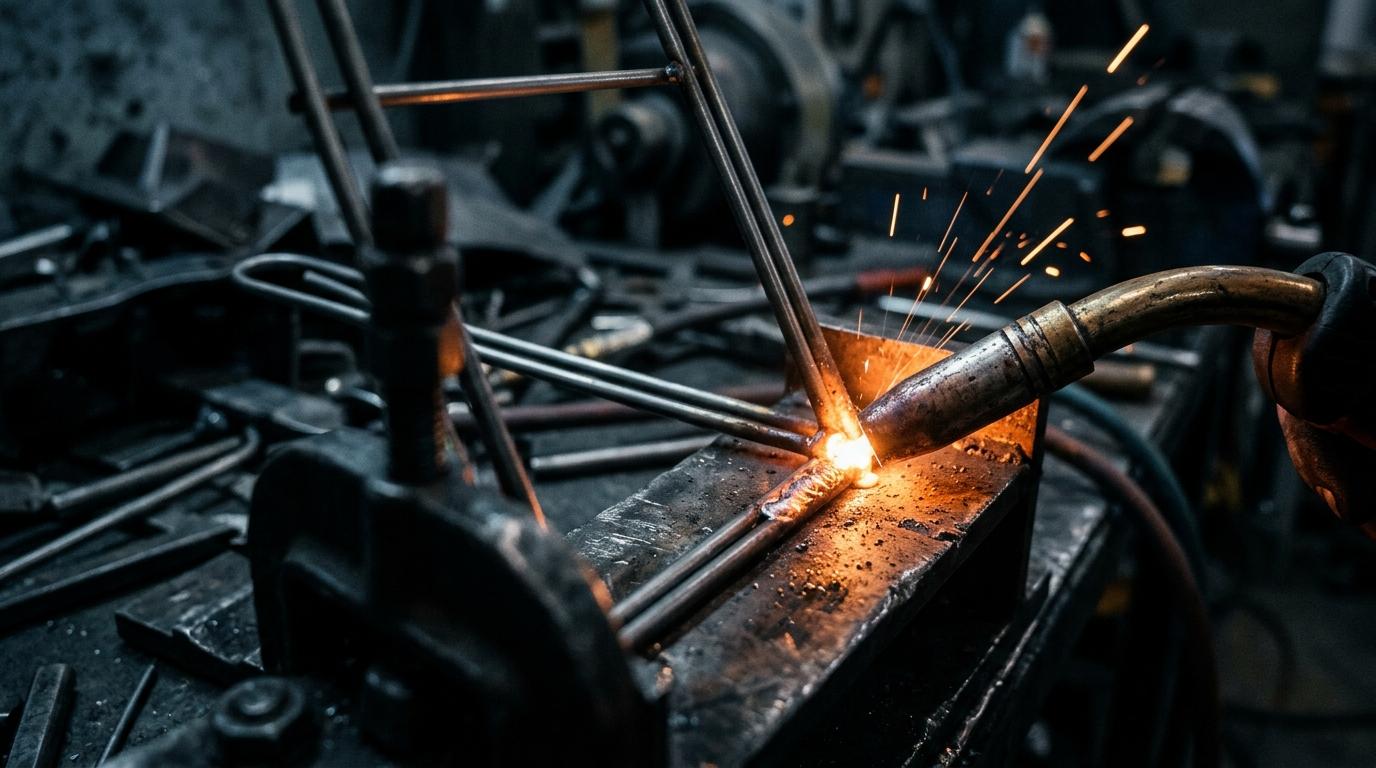
Welding introduces extra variables. Heat can change geometry, fixture strategy, and downstream fit, especially in assemblies with multiple wire or sheet interfaces.
-
OSHA treats welding hazards as real and varied. Metal fumes, ultraviolet radiation, burns, eye damage, electrical shock, cuts, and crushed fingers or toes are all part of the risk profile that disciplined suppliers must control.
-
Repeatability is often more valuable than one excellent first article. OEM lines need lots that behave the same way over time, not isolated hero parts.
-
Total cost includes engineering time, rework, and logistics. A supplier with integrated processes can sometimes reduce handoffs, shorten debug cycles, and simplify corrective action when something drifts.
How should OEMs qualify a supplier before releasing a program?
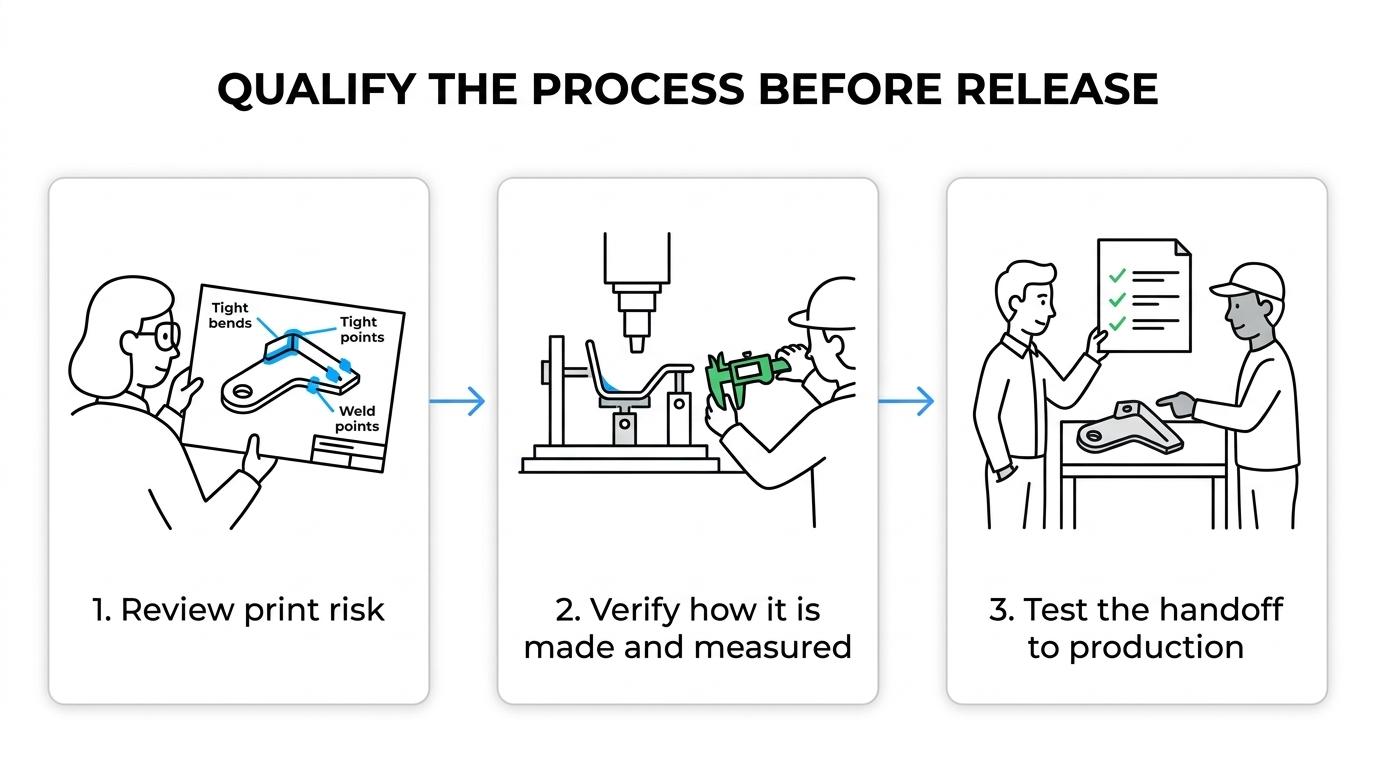
The best qualification process checks process capability before PO placement. Start with print risk, then review tooling, metrology, change control, and delivery performance.
Step 1 is to review the drawing for manufacturing risk. Identify critical-to-function dimensions, cosmetic requirements, weld locations, finish needs, and any bend-heavy geometry that may be sensitive to springback. If those issues are not discussed early, the quote may rest on assumptions rather than a stable plan.
Step 2 is to ask how the part will actually be made and measured. This is where buyers learn whether the supplier uses appropriate CNC wire forming, welding fixtures, in-process checks, and final inspection methods. Pro tip: ask which dimensions are checked during production versus only at final inspection. That answer tells you a lot about how problems are prevented.
Step 3 is to test the handoff between engineering and operations. If engineering understands the print but production receives vague work instructions, the risk moves downstream.
Ask for details like these:
- Control plan: how key dimensions and attributes are verified
- Prototype path: what changes when sample parts become repeat production
- Weld verification: how distortion, joint quality, and fixture stability are checked
- Capacity view: what equipment and staffing support recurring releases
How do you move from prototype to production without changing the part every month?
Argo Products Company highlights a common OEM need: moving from prototype samples to large-scale output without changing the part’s functional intent. In precision wire forming, that means locking material, bend sequence, fixturing, and inspection before demand ramps.
Step 1 is to decide what the prototype is proving. Is it checking basic fit, load performance, operator interaction, or all of the above? If the prototype goal is vague, then revision churn is almost guaranteed because each stakeholder evaluates the sample against a different standard.
Step 2 is to run a pilot build that resembles real production more closely than the first sample did. That includes production-intent material, production-style fixtures, and realistic inspection points. A common misconception is that the prototype phase should stay informal until launch. In practice, too much informality is what causes late surprises.
"Argo Products Company supports programs from early prototypes to large-scale production, which is commercially useful because OEM buyers often need one supplier path instead of a separate sample shop and production shop."
Step 3 is to freeze what matters and document what can move. If bend radii, weld positions, or contact points are function-critical, they need explicit control. If a noncritical feature has room to vary, state that too. Clear boundaries help both cost control and repeatability.
How should buyers assess welding risk in custom metal assemblies?
Welding adds both dimensional risk and worker-safety risk. OSHA identifies metal fumes, ultraviolet radiation, burns, eye damage, electrical shock, and crush injuries as hazards, so buyers should treat weld design and process control as sourcing criteria, not shop-floor details.
In industrial safety practice, ESW’s MSA gas masks illustrate the kind of respiratory protection framework that sits behind serious fume-control programs in metalworking environments.
Step 1 is to ask whether the weld is necessary. If a one-piece wire form or a different geometry can remove a welded joint, then the part may become easier to repeat and inspect.
Step 2 is to evaluate distortion control. Weld sequence, clamping strategy, heat input, and post-weld inspection all matter. If an assembly must nest, guard, retain, or interface with a mating part, then even small movement can cause trouble later.
Step 3 is to confirm process discipline. Buyers do not need to manage shop safety programs directly, but they should expect evidence that the supplier treats welding as a controlled operation. A robotic weld cell is not a shortcut around process control. It still needs validated fixtures, stable inputs, and defined inspection criteria.
How do wire forms compare with machined parts, stampings, and sheet metal?
Wire forms often win when geometry is bend-driven rather than block-driven. Compared with machined parts, stampings, or laser-cut sheet assemblies, custom wire forms can reduce weight, material use, and assembly steps, though they impose their own tolerance and springback limits.
A wire form makes sense when the part’s function depends on routing, spacing, retention, airflow, guarding, or carrying loads through formed profiles rather than solid mass. Baskets, guards, retainers, hooks, frames, and supports are familiar examples. If the part needs deep pockets, broad planar surfaces, or high-precision machined interfaces, another process may be better.
The trade-off is straightforward. Machined parts can hold certain features very precisely, but they may cost more in material removal and cycle time. Stampings are efficient at volume, but tooling economics and flat-pattern constraints change the decision. Sheet metal assemblies can create larger surfaces, though they may add joining steps.
"Argo Products Company produces CNC wire forming in 2D and complex 3D configurations, plus robotically welded assemblies and resistance-welded products, which is a practical benchmark when one component family spans multiple metal processes."
Is one integrated supplier better than several specialized vendors?
One integrated supplier is usually faster for parts that mix wire forming, welding, and adjacent metal processes, while multiple specialists can make sense when each component needs a very different technology stack.
The biggest advantage of an integrated source is fewer handoffs. Engineering communication is simpler, timing is easier to coordinate, and root-cause analysis is clearer if a dimension drifts or an assembly fails fit-up. That matters when the same part family includes formed wire, welded subassemblies, stampings, or threaded features.
The trade-off is concentration risk. If a single supplier has a disruption, more of the program may be exposed. Buyers should weigh that against the friction of splitting responsibility across several vendors. If a fit issue appears in a multi-vendor chain, each supplier may point to the previous step.
A practical rule works well here: if one process dominates and the rest are minor secondary operations, an integrated supplier is often the cleaner choice. If the program combines very different technologies with unrelated tolerance drivers, a split-sourcing model may still be justified.
What questions should you ask before sending an RFQ for custom metal products?
A better RFQ produces a better quote. Buyers should define function, tolerances, annual volume, material, finish, and validation needs before asking suppliers to price custom metal products.
Too many RFQs describe geometry but not intent. If a supplier does not know which dimensions matter most, what environment the part sees, or whether the first order is a prototype run or an ongoing release, the quote will have hidden assumptions. Those assumptions turn into delays later.
Include these basics:
- Critical-to-function dimensions
- Annual and peak volume
- Prototype quantity and required timing
- Weld, finish, packaging, and traceability needs
One last pro tip is simple: if you are unsure which tolerances are truly critical, say so in the RFQ and invite feedback. A strong supplier will often spot where a print is overcontrolled, underdefined, or better suited to a different metal process, which is exactly the kind of input OEM buyers need when custom metal products have to perform reliably in production.
Keywords:
custom metal products